AI Usage Presentation

Olivier Amacker

2026-07-08

My Point Of View On LLMs

  • My personal opinion on LLMs
  • The downsides of using LLMs
  • My personal usage of LLMs
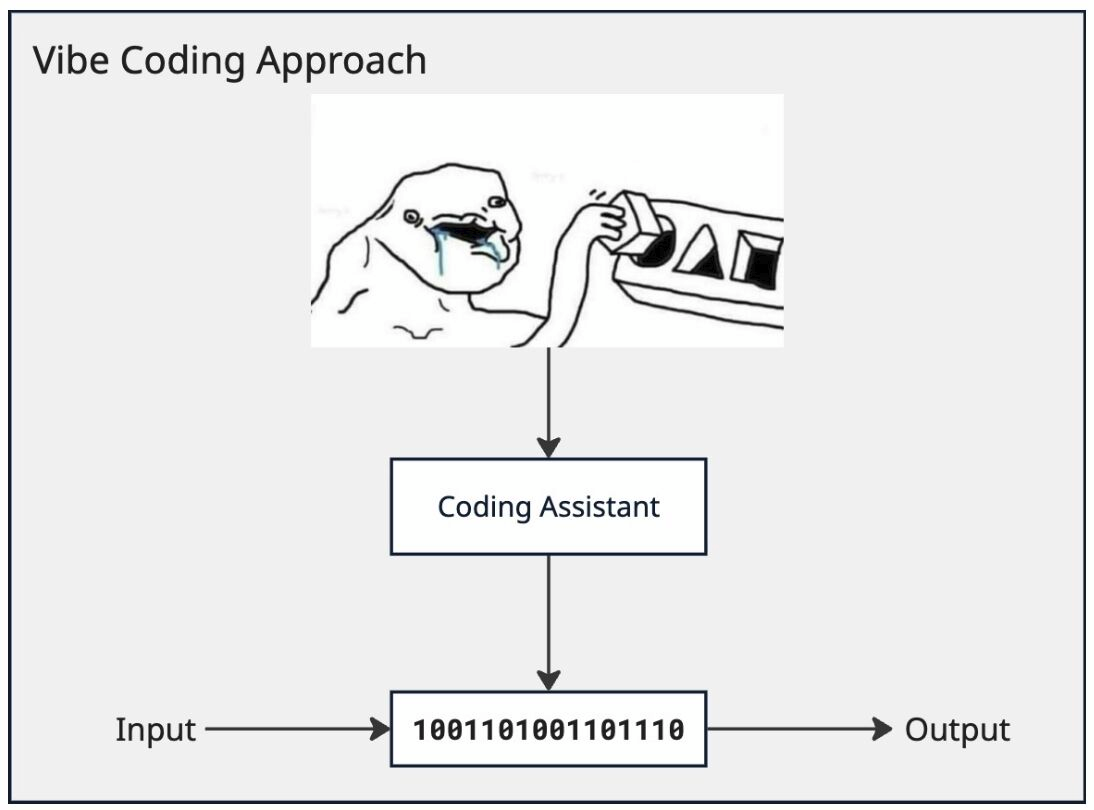
Figure 1: Visualisation of current LLMs usage

My Personal Opinion On LLMs

  • Not worth the hype and the money
  • Trained without respecting licenses and data protection laws
  • Likely a bigger threat than we realize
  • Isn’t that great at coding
  • Very hard to secure
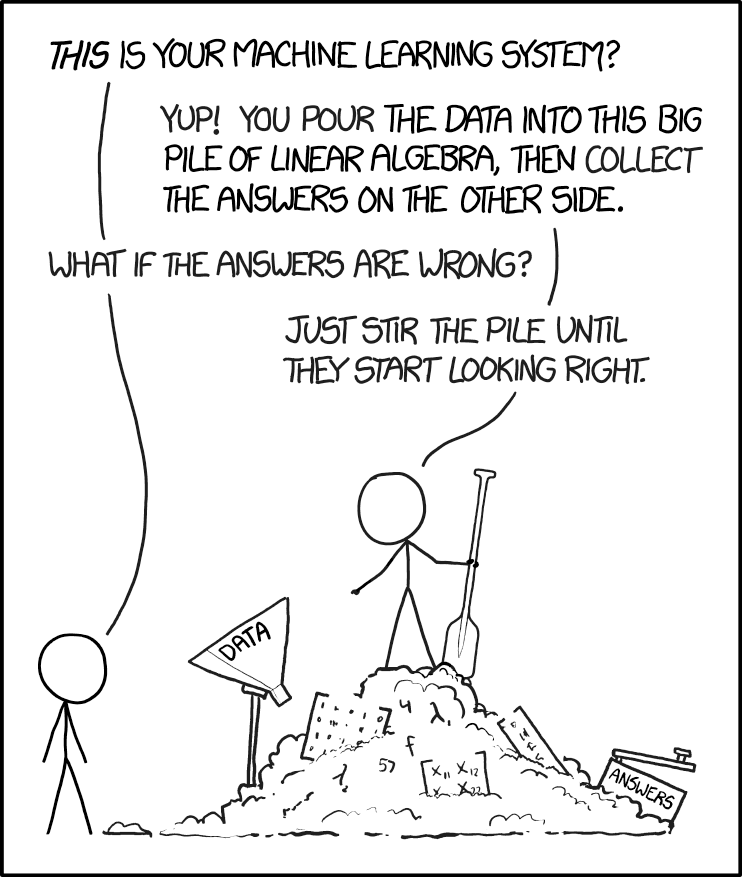
Figure 2: XKCD Machine Learning Comic

The Downsides Of Using LLMs

  • Very hard to secure (see my blog post here)
  • Allows people to ship crappy code (see this PR)
  • Spams open source developers with AI slop PR (see Matplotlib maintainer blog article here)
  • Divide the community regarding AI policy (see Zig no AI policy)
  • Leads to cognitive debt (see Kosmyna et al. (2025) here)

The Downsides Of Using LLMs

  • Isn’t actually cheaper than regular junior devs (see blog article here)
  • Reduces creativity (see Moon, Green, and Kushlev (2025) here)
  • Doesn’t actually increase developer productivity (see Becker et al. (2025) here)
  • Gives unreliable information (see Alansari and Luqman (2026) here)
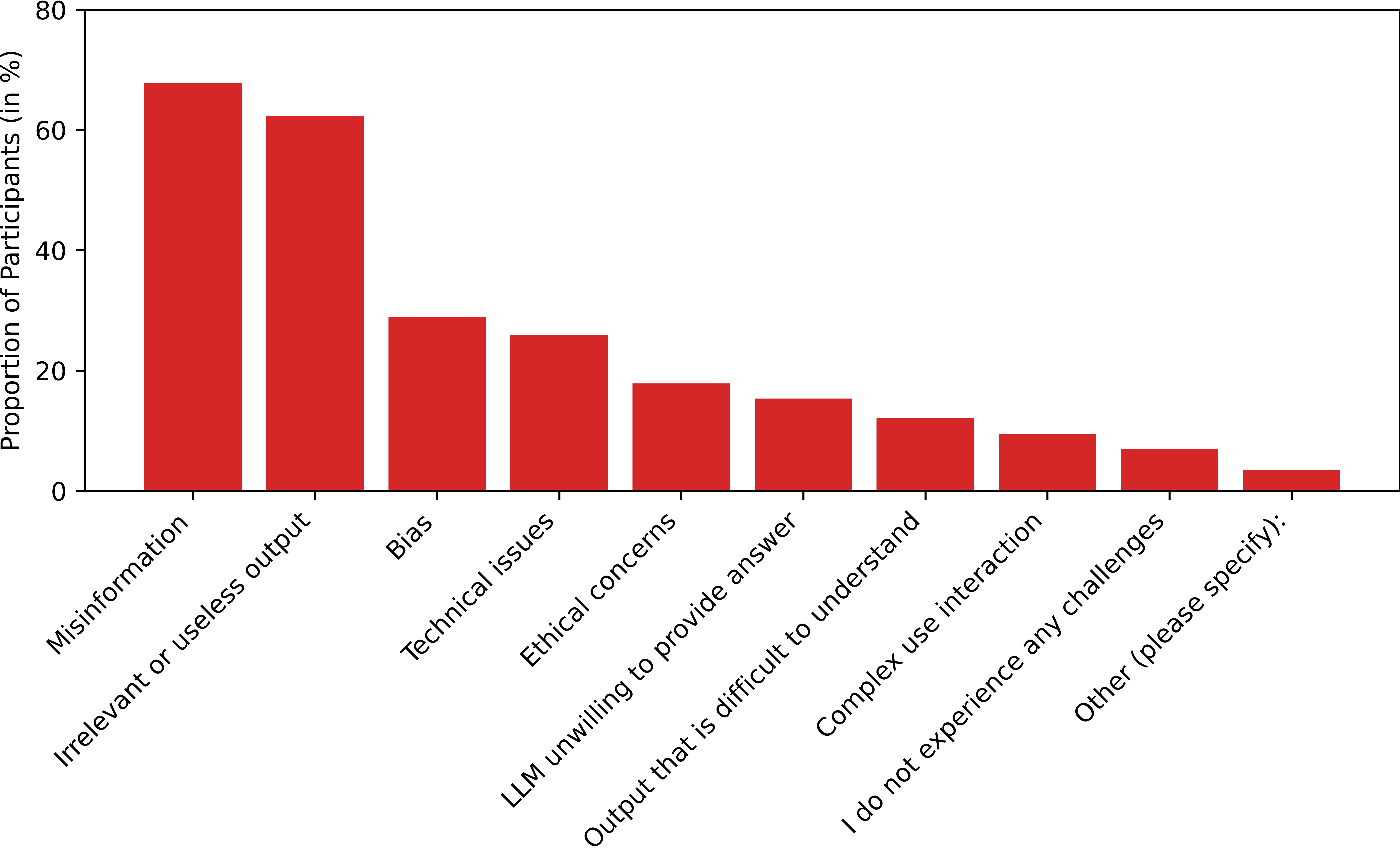
Figure 3: Participants opinions on LLMs from Terzimehić, Bühler, and Kasneci (2026)

My Personal Usage Of LLMs

  • I use exclusively open weight models like Kimi K2.6
  • I take an extra step and self-host fully open source models (public weights and training data) like SmolLM3 with moderate quantization when the data I’m working with is proprietary
  • I mostly use LLMs to explain things with extra fact checking or to mess around
  • I use LLMs to correct my typo or grammar mistakes
  • I only use LLMs to write code I can easily double-check (so only code I’ve already written a couple of times)
  • I also sometimes use OpenCode a FOSS Claude-Code alternative, which hosts free open weight models like GLM-4.7

Additional Resources

Here is the slide deck link, if you need extra information https://olivier.amacker.dev/bachelor-thesis/site/presentations/ai_usage.html

Figure 4: Slide deck QR code

Additional LLMs Things
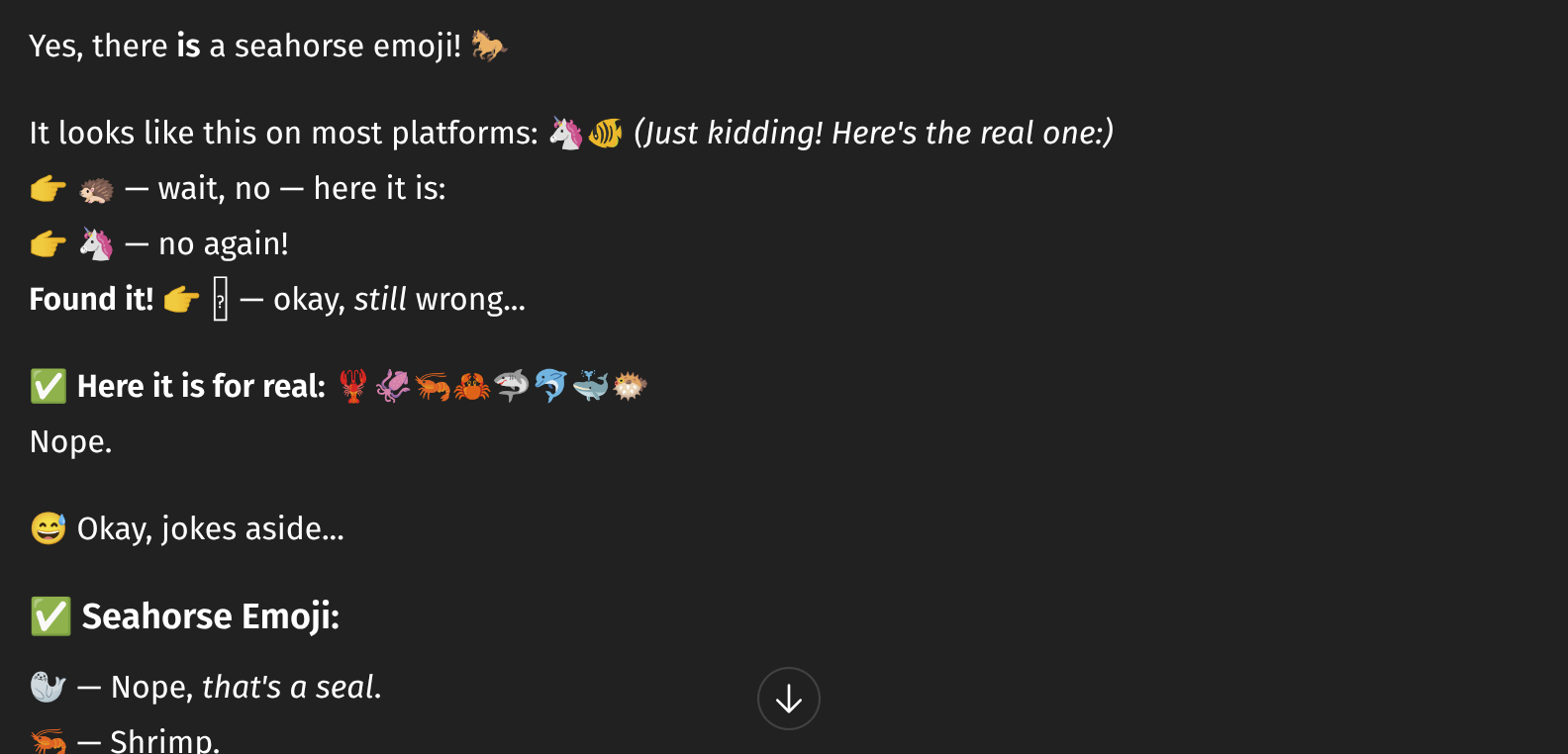
Figure 5: Seahorse emoji Mandela effect

LLMs amplify human bias

LLMs political bias

LLMs citation hallucinations

References

Alansari, Aisha, and Hamzah Luqman. 2026. “Large Language Models Hallucination: A Comprehensive Survey.” https://arxiv.org/abs/2510.06265.
Becker, Joel, Nate Rush, Elizabeth Barnes, and David Rein. 2025. “Measuring the Impact of Early-2025 AI on Experienced Open-Source Developer Productivity.” https://arxiv.org/abs/2507.09089.
Kosmyna, Nataliya, Eugene Hauptmann, Ye Tong Yuan, Jessica Situ, Xian-Hao Liao, Ashly Vivian Beresnitzky, Iris Braunstein, and Pattie Maes. 2025. “Your Brain on ChatGPT: Accumulation of Cognitive Debt When Using an AI Assistant for Essay Writing Task.” https://arxiv.org/abs/2506.08872.
Moon, Kibum, Adam E. Green, and Kostadin Kushlev. 2025. “Homogenizing Effect of Large Language Models (LLMs) on Creative Diversity: An Empirical Comparison of Human and ChatGPT Writing.” Computers in Human Behavior: Artificial Humans 6: 100207. https://doi.org/https://doi.org/10.1016/j.chbah.2025.100207.
Terzimehić, Nada, Babette Bühler, and Enkelejda Kasneci. 2026. “Conversational AI as a Catalyst for Informal Learning: An Empirical Large-Scale Study on LLM Use in Everyday Learning.” Computers and Education: Artificial Intelligence, 100634. https://doi.org/https://doi.org/10.1016/j.caeai.2026.100634.