303.1 Semester Project Presentation

What Is DWI ?

MRI technique that measures the diffusion of water molecules in biological tissues.

  • Principle: Uses magnetic field gradients to sensitize the MRI signal to water diffusion
  • Key parameters:
    • b-values
    • b-vectors
Figure 1: Visual example of DWI, sourced from Dr. A. Rokem, DIPY workshop 2021

Why DWI ?

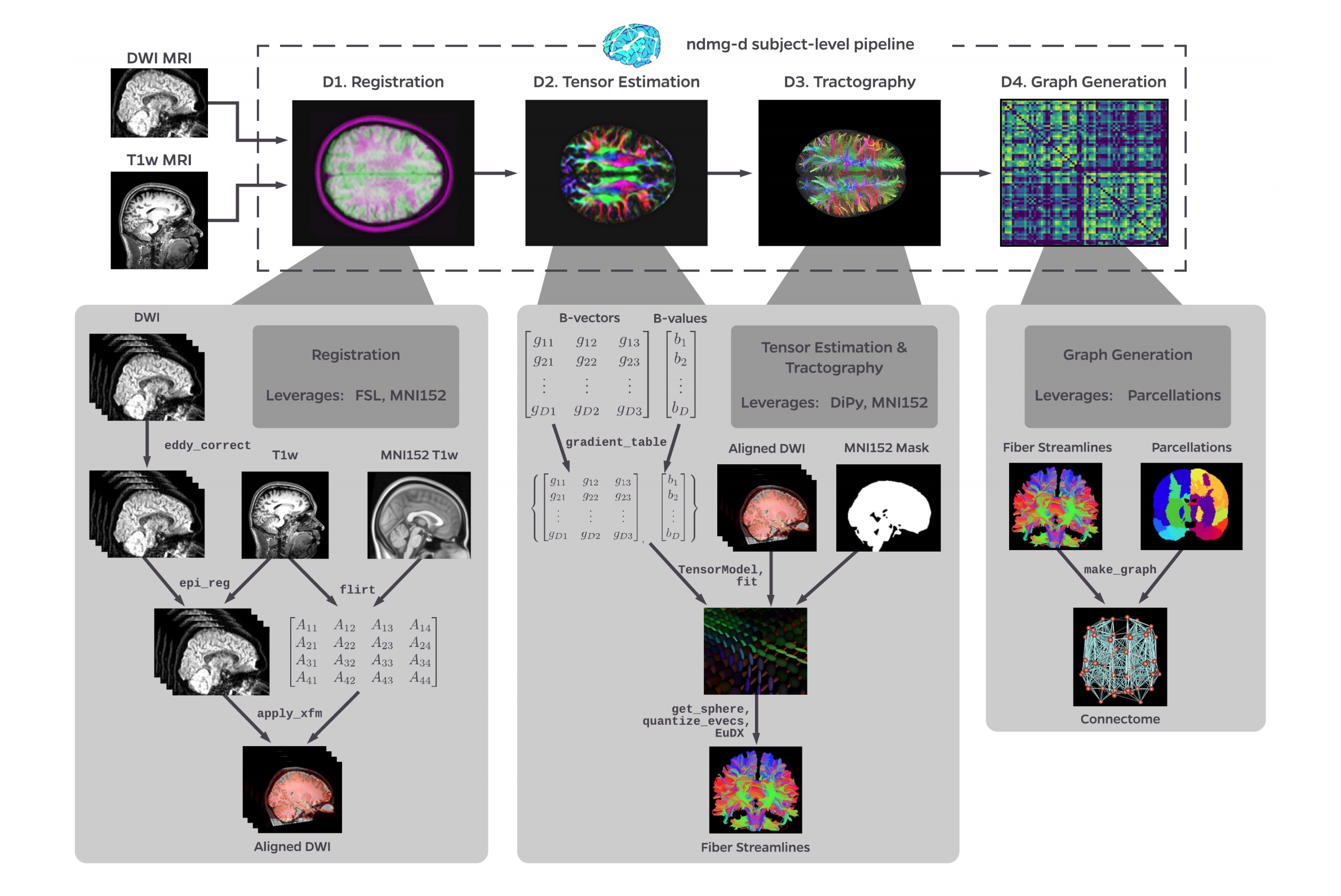
Figure 2: NDMG detailed pipeline

Project Goals

  • Contribute to DIPY
  • Add prediction capabilities to
    the existing GeneralizedQSamplingModel class

What Has Been Done

  • Enabled prediction for the GeneralizedQSamplingModel class
  • Rigorous Testing
    • Unit tests (100% coverage)
    • Integration tests via different Marimo notebooks
  • Automated code documentation via Sphinx
  • Created a DIPY tutorial document on the prediction pipeline
  • Project documentation (see homepage)
  • Ongoing pull request on Prof.Estban DIPY fork
    • Currently being reviewed by the DIPY’s team

DIPY GQI Model Pipeline

GQI DWI DWI Model model = GQIModel(bvals, bvecs, ...) DWI->Model Fit model.fit(data) Model->Fit ODF ODF Fit->ODF
Figure 3: DIPY GQI model simplified pipeline, made with GraphViz
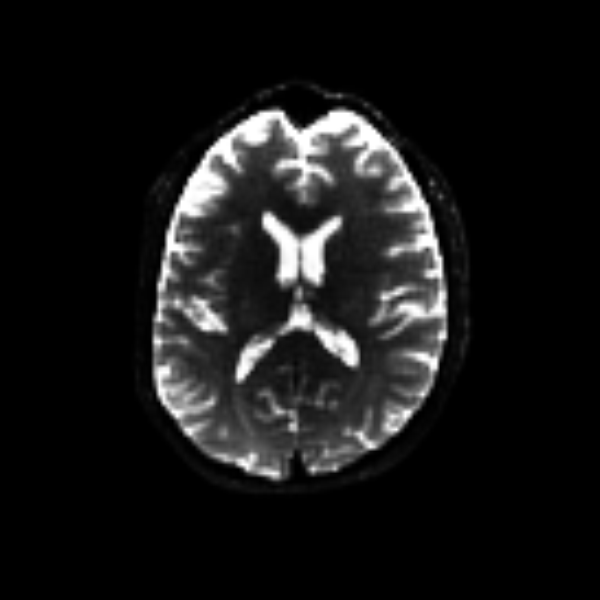
Figure 4: GQI model input image example,
from the stanford_hardi dataset1
→
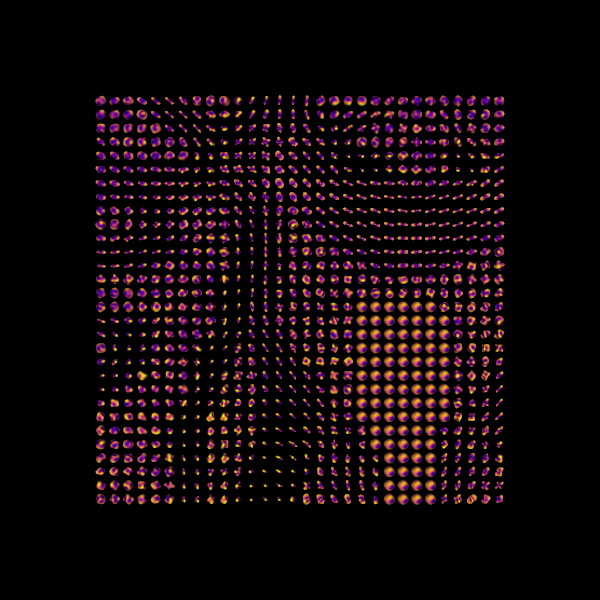
Figure 5: GQI model output example (ODF),
from the stanford_hardi dataset¹

How Is The Signal Predicted ?

\[ \begin{alignat*}{2} &ODF &&= S \cdot K \\ \iff\quad & ODF \cdot K^{+} &&\approx S \cdot K \cdot K^{+} \\ \iff\quad & ODF \cdot K^{+} &&\approx S \\ \iff\quad & S &&\approx ODF \cdot K^{+} \end{alignat*} \]

Where:

  • \(S\) is the GQI model fitted signal (or data)
  • \(K^{+}\) is a regularized pseudo-inverse of the GQI kernel \(K\).

Testing Methodology

  • Signal reconstruction based on seen data
    • To make sure that the predict function implementation works properly
  • Signal prediction based on unseen data
    • To test the generalization of the predict function

Testing Methodology: Reconstruction Tests
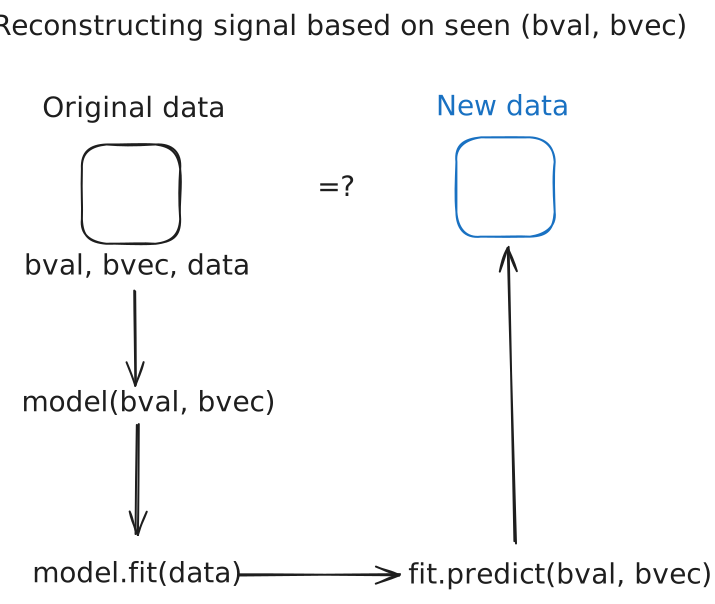
Figure 6: Reconstruction pipeline schema, made with excalidraw

Single-Voxel Reconstruction Results
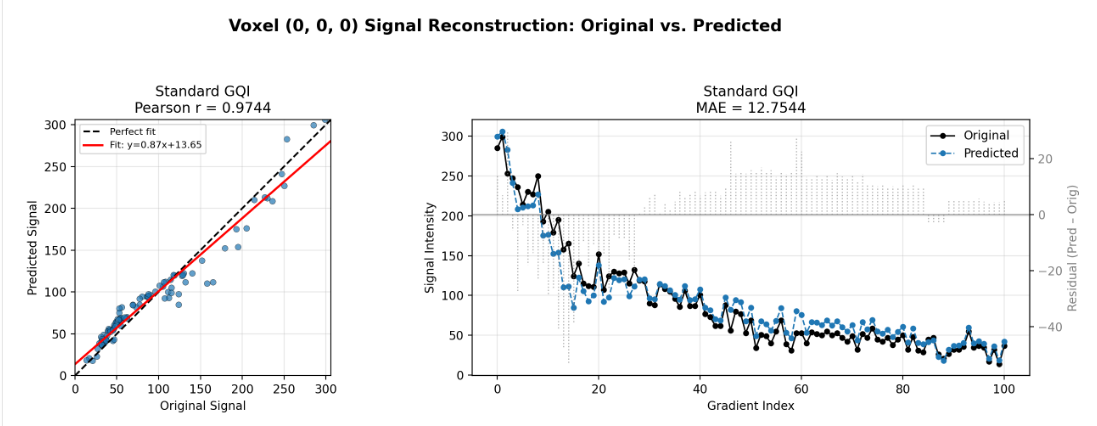
Figure 7: Voxel (0, 0, 0) Signal Reconstruction: Original vs Predicted based on the small_101D dataset1

Multi-Voxel Reconstruction Results
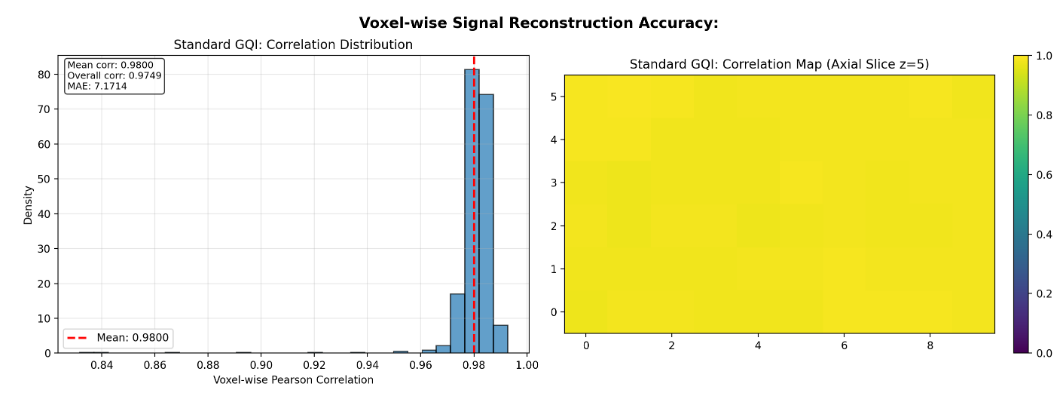
Figure 8: Voxel-wise Reconstruction Accuracy based on the small101D dataset

Testing Methodology: Unseen Prediction Test
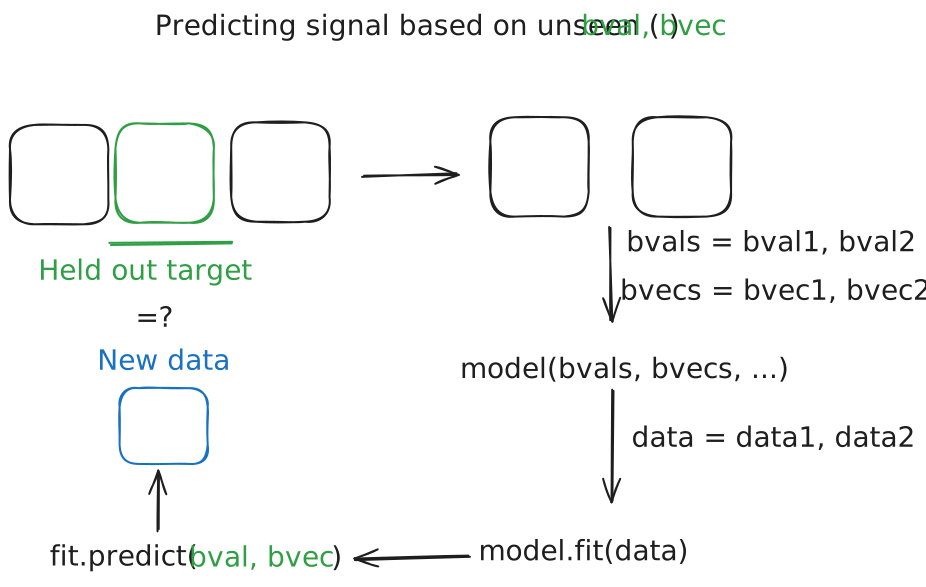
Figure 9: Unseen data prediction pipeline, made with excalidraw

Unseen Prediction Results
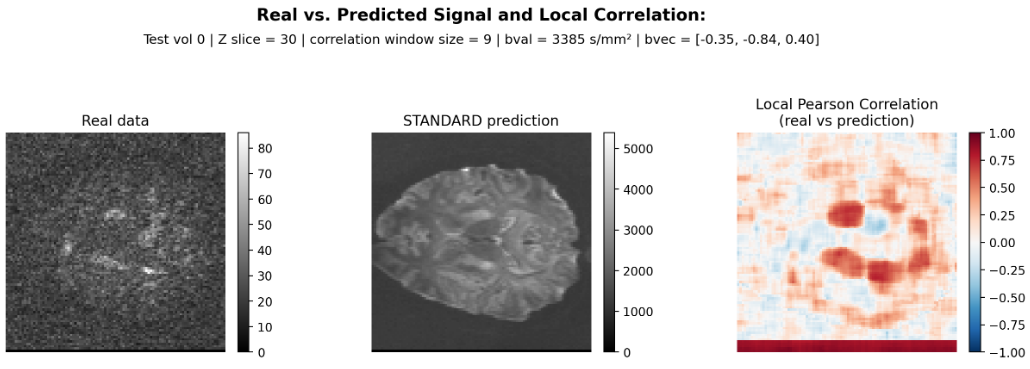
Figure 10: Unseen data prediction results based on the taiwan_ntu_dsi dataset1

Comparison Of
Reconstruction Vs Unseen Predictions
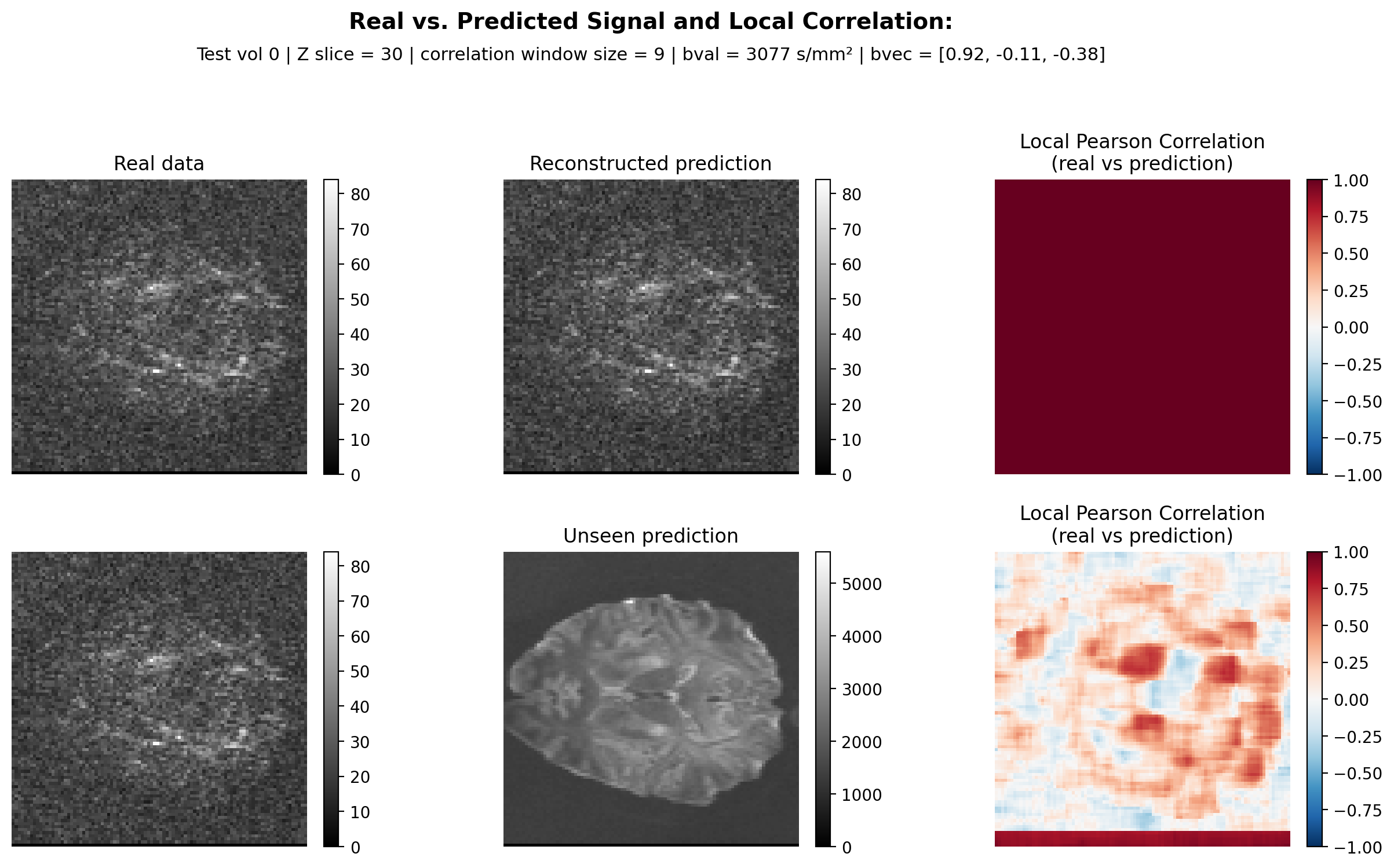
Figure 11: Comparison of reconstruction vs unseen predictions based on the taiwan_ntu_dsi dataset

Impact

  • Head motion noise reduction (see Ben-Amitay, Jones, and Assaf (2012))
  • Meaningful data augmentation
  • Model cross validation

Conclusion

  • Great introduction to medical data science
  • Interesting to work on an established open source project
  • Useful bachelor thesis warm up

Additional Resources

If you want more information about the project please visit this project website
https://olivier.amacker.dev/303.1-semester-project/

Figure 12: Project website QR code

References

Ben-Amitay, Shani, Derek K. Jones, and Yaniv Assaf. 2012. “Motion Correction and Registration of High b-Value Diffusion Weighted Images.” Magnetic Resonance in Medicine 67 (6): 1694–1702. https://doi.org/10.1002/mrm.23186.